The pace and depth of change will never be this slow or shallow again.
Across most markets, categories and disciplines, that is simply the condition of business now. It creates extraordinary opportunity and real, sometimes existential, risk.
I have worked in strategy for more than thirty years and studied and taught it at Oxford for much of the past decade. The contexts have changed beyond recognition. One pattern has remained remarkably constant:
The businesses that succeed, and keep succeeding, are those that see better than others.
They notice what others miss. They challenge assumptions others have accepted as fixed, including their own. They recognise where value is moving before it becomes obvious. They keep revising their understanding of the world as it changes. In a small number of cases, they change that world themselves.
This capacity has become increasingly important with the mass adoption of generative AI.
Information, analysis and the ability to test, model and prototype ideas are becoming dramatically more accessible. These technologies are also destabilising assumptions on which long-established industries have been built.
As access to the same tools becomes widespread, advantage moves towards the quality of the questions people ask, the assumptions they are willing to expose and the possibilities they are able to recognise before others do.
The businesses that thrive will be those able to keep seeing what others cannot, then turn that insight into value others have not yet created.
My talks and workshops help leaders and organisations develop this capability: seeing technological change more clearly, testing the assumptions shaping their decisions and developing strategies that remain useful as the world around them moves.
“We engaged Saul Betmead at a pivotal time when we wanted to bring our senior management team together to develop a shared vision and a clear strategic direction.
Most importantly, while we developed a clear, shared vision for the future, the greatest outcome was that our leadership team left feeling energised, aligned, and with a genuine sense of cohesion-exactly what we had set out to achieve.
We would highly recommend Saul to any organisation looking to strengthen leadership alignment, develop a compelling strategic vision, and build a more connected, high-performing team.
John Wilson – Chairman, Ulster Carpets, 2026
How I can help
Whilst every engagement is different, my speaking work tends to be in one of two areas.
Boards and Leadership off-sites
Sessions for executive teams and boards addressing an important question about strategy, change or the future direction of the organisation.
I speak with the leaders involved beforehand and develop the session around the circumstances of the business. The work combines ideas, structured discussion and the opportunity to examine the assumptions shaping the decisions in front of the group.
Company conferences
Talks and workshops for larger audiences exploring strategy, judgement, technological change and the ways organisations create and lose advantage.
Each session is developed around the organisation and the purpose of the event, drawing connections between the wider subject and the circumstances people in the room are experiencing.
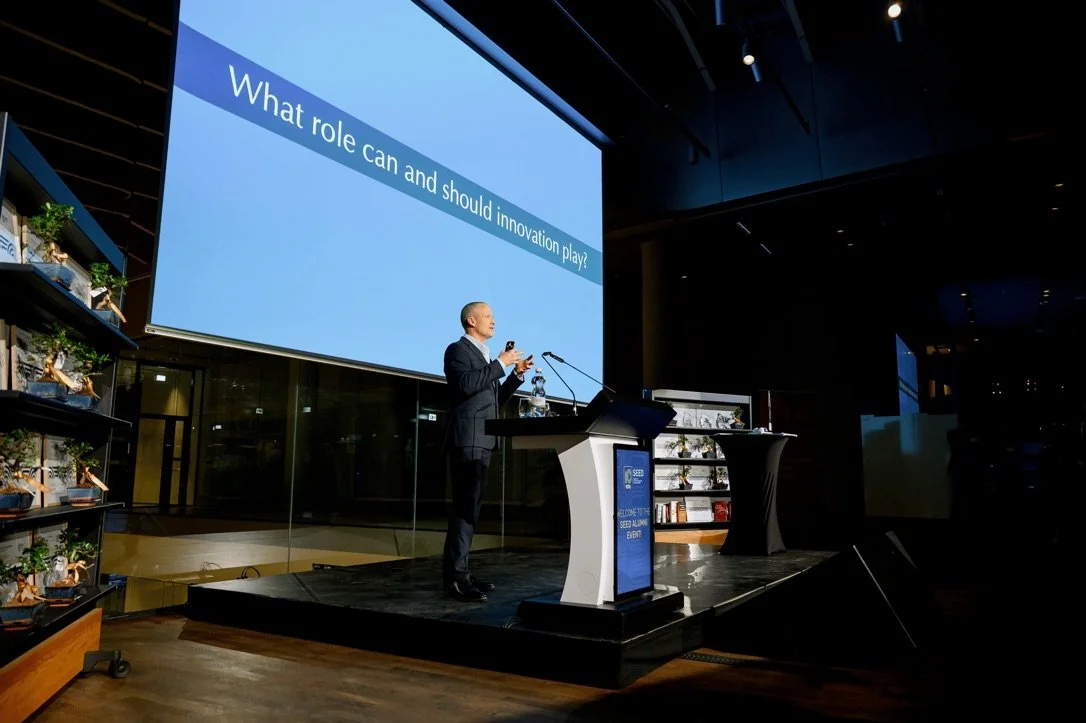
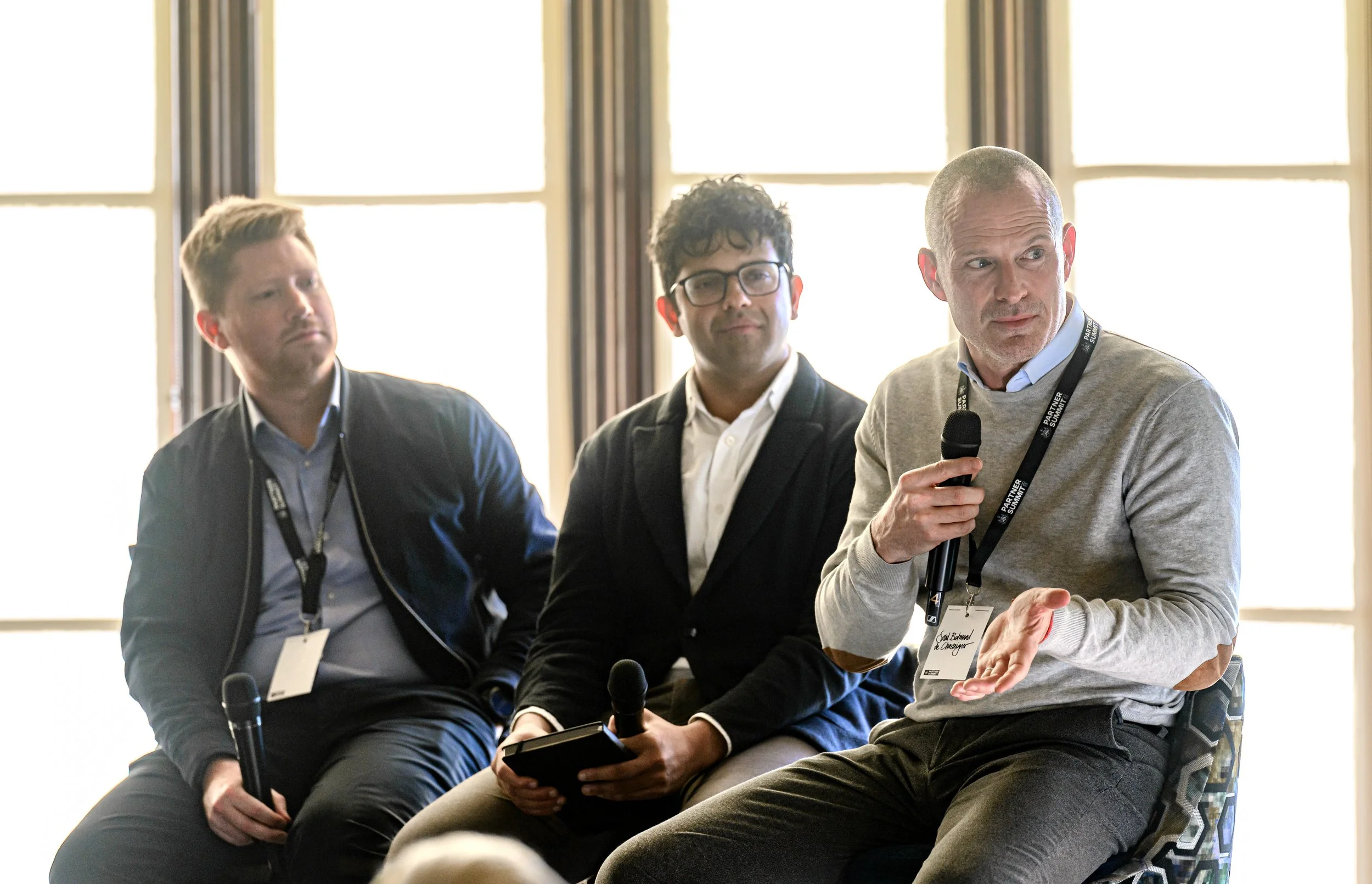
Whilst each session is developed for the organisation, several themes recur in my recent work.
Recent topics
Every organisation depends on assumptions about customers, value, expertise and the future of its market.
This session explores the leadership role in bringing important assumptions into view, examining the evidence beneath them and recognising when they need to be revised.
The session is adapted from one I regularly teach at Oxford.
Leaders as Assumption Brokers
Strategic illusions develop when an organisation continues to interpret evidence through an established account of how the world works.
This session explores why experience can make these illusions particularly persistent, how they shape strategic decisions and how leadership teams can examine what they have come to believe..
Strategic illusions
Advanced decision making and competitive advantage
Leaders regularly make decisions with incomplete evidence, competing interests and consequences that are difficult to reverse.
Drawing on psychology, philosophy and negotiation, this session examines how people reach such decisions and how leaders can improve the quality of their judgement.
AI is already increasing the speed and efficiency of many forms of work, while extending what individuals and organisations are able to do.
This session examines the relationship between AI and human expertise: how expertise shapes the questions, context and judgement applied to these systems; how their use can enrich expertise in return; and what this means for leaders making decisions about work, capability and competitive advantage.
AI and the value of expertise
Every session is developed around the audience, the context and what the organisation wants the event to accomplish.
If you have a date or subject in mind, send me a note and I will come back to you personally.
“Working with Saul over the past few years has been a real privilege. Through his support of our Fellowship Programme, he has consistently challenged our thinking, inspired fresh perspectives and helped create conversations that continue long after the sessions end. He has a rare ability to engage people from very different backgrounds with warmth, curiosity and intellectual rigour, making even the most complex issues feel accessible and relevant.
I couldn’t recommend Saul more highly to any organisation looking to develop thoughtful, courageous and values-driven leaders.”
Eva Grosman, CEO, Centre for Democracy and Peace, Northern Ireland.
“It was an honour to have you join us Saul. We have been getting great feedback on your talk, workshop and panel contributions. Thanks again from the whole team.”
Unsolicited feedback from Leadership Conference, Newcastle, 2025